When and How AI Should Assist Brainstorming for AI Impact Assessment
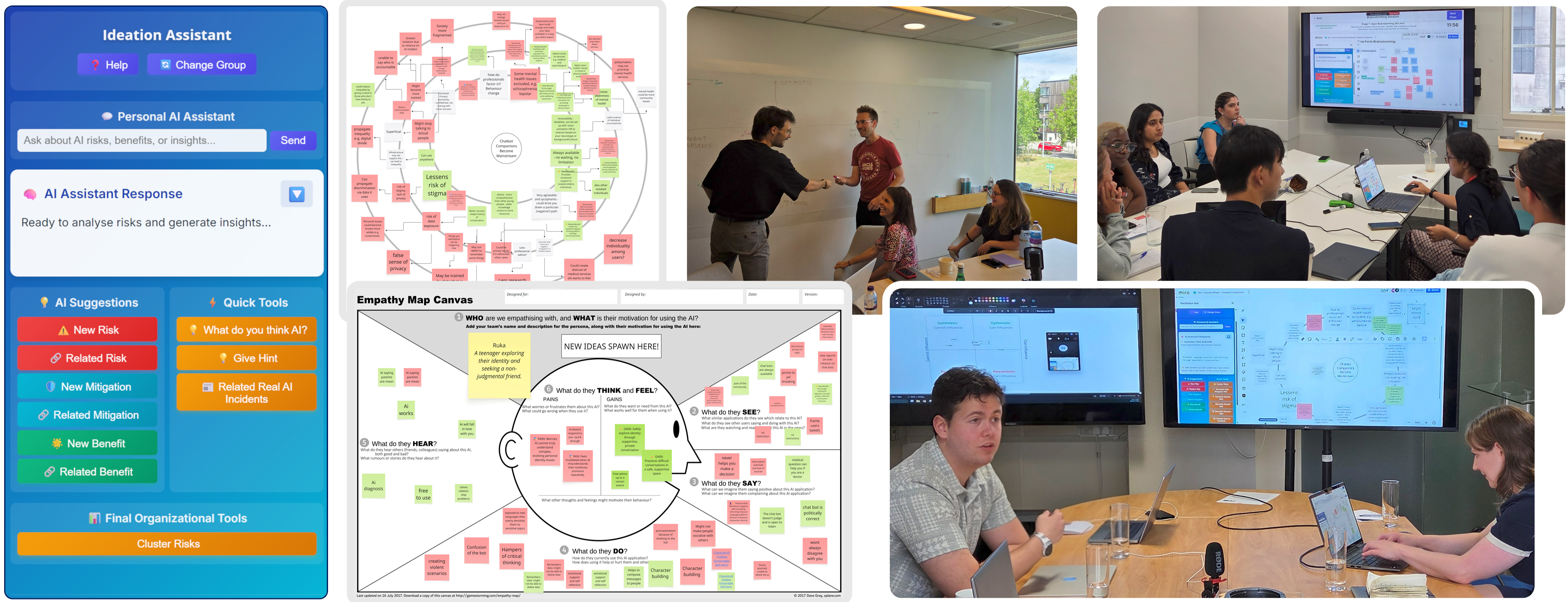
A key task in AI practice is to assess potential impacts to prevent harm. This project examined how AI can support team brainstorming during AI impact assessment; a gap, since current tools are not designed for or evaluated in collaborative, team deliberation settings. Across 15 in-person workshops with 82 participants, we co-designed AI interventions for two structured brainstorming methods adapted from strategic foresight (Futures Wheel and Empathy Mapping), then evaluated them against human-only teams. One of the main findings is context-dependent. For a general-purpose use case (an AI chatbot companion), AI-assisted teams generated 48% more impacts, scored higher on six of eight quality metrics, and reported reduced anxiety, increased confidence, and a greater sense of control. For a specialised case (a kidney allocation system), gains were smaller (22% more impacts, limited to unique risks and effective mitigations) and perception benefits were not significant. Overall, AI-generated ideas did not match human's on the two creativity measures (uniqueness and novelty); human risks skewed more systemic and longitudinal, while AI focused on model-capability risks. The study also yields design guidance grounded in observed participant behaviour. Participants reached for AI mainly at points of idea saturation or time pressure, and preferred it to act as a facilitator and domain expert rather than another idea-generating peer, developing their own ideas first, then using AI to cluster, structure, and stress-test them. They welcomed automation of tedious tasks like note-taking and organising sticky notes. The takeaway: responsible AI tools should amplify human creativity and preserve agency, supporting brainstorming without displacing the judgement teams value doing themselves.
Publications
- When and How AI Should Assist Brainstorming for AI Impact Assessment. FAccT 2026 PDF
Code and data
N.B.: If you do not receive the instruction message within a few hours, please check your junk/spam e-mail folder just in case the email was moved there.